
About
The story behind Heartland Health
Where this practice came from, how I got here, and what it’s actually like to sit down with me.
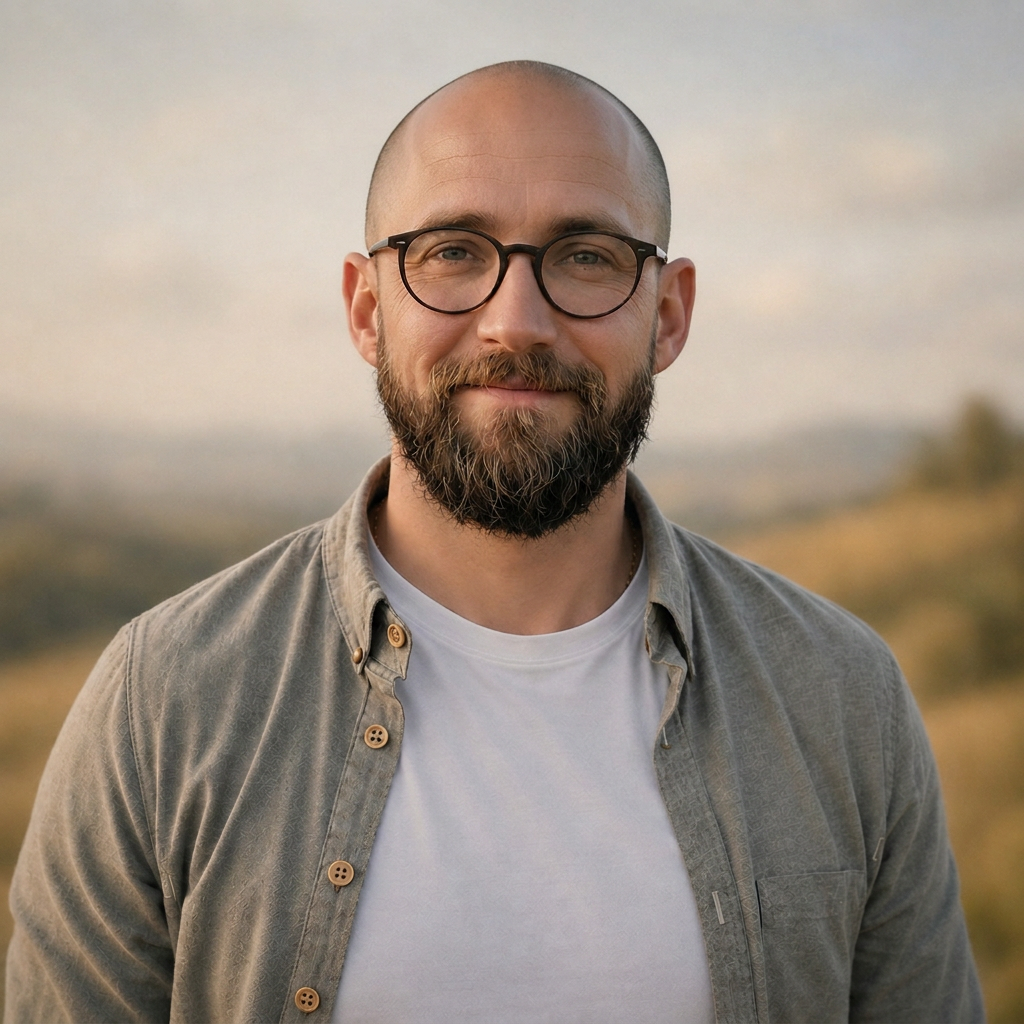
J.R. Scarpino — Registered Psychologist
I’m J.R. Scarpino, a registered psychologist. Heartland Health is named for the American Midwest I grew up around and the people in it — steady, practical, quietly resilient, and far more comfortable offering a hand than asking for one. That spirit is woven into how this practice works: unhurried, down-to-earth, and shaped around the person in front of me.
I’ve always been drawn to listening to people and trying to understand what sits underneath the things we say and do. I find people genuinely interesting — their stories, relationships, strengths, contradictions, struggles and the ways they make meaning of their lives. Heartland Health grew out of that: a small, personal practice where psychology stays human, practical and connected to real life.
I also know that asking someone for help can take courage. You may have had wonderful experiences with therapy before, difficult experiences, or no experience at all. You may be wondering whether you’ll feel understood, whether you’ll be judged, or whether talking to another psychologist will actually make any difference. Those are fair questions, and worth bringing with you.
Who I work with
Children, adolescents, adults and parents
I work with children, adolescents, adults and parents, and I welcome people as they are. People come to therapy for all kinds of reasons. Sometimes life starts to feel harder to carry. Sometimes the same thoughts, feelings or patterns keep getting in the way, relationships become difficult, or something happens that changes how things feel. Sometimes there’s no obvious explanation at all — just a sense that things aren’t quite right. Whatever brings someone in, the work begins with respect for their choice, pace, preferences and capacity.
People arrive from many backgrounds and walks of life. There’s no single right way to do this — only the way that makes sense for you, right now.
Background
The road here
Before psychology, I served in the military. That background shapes how I work more than what I talk about — an ear for service life, transition and the way people carry things quietly. It’s part of the story rather than the whole of it: Heartland Health is for the broader community as much as for people with military, veteran and first-responder backgrounds.
That experience is one part of how I came to this work. My professional background includes a Bachelor of Psychological Science (Honours) and a Master of Psychology (Clinical). I’m registered with the Psychology Board of Australia as a Registered Psychologist and am currently completing the pathway toward clinical endorsement.
How I work
Person-centred, relational, and practical
My practice is relational, person-centred, trauma-informed, strengths-based and neuroaffirming. I work integratively — drawing on evidence-based methods and combining them with genuine curiosity about the person in front of me — because no single model fits every person or every problem. The aim is always to make psychology practical and relevant to real life, not something that only makes sense inside a textbook.
A lot of the work comes down to awareness, acknowledgement and appreciation: understanding what’s actually happening, recognising what matters, and finding some compassion for ourselves, our stories, and the people and places that shaped us.
Each person is the expert on themselves; I don’t want to pretend to know, and I’m always open to learning.
Much of what we come to understand takes shape between people — through honest conversation, careful listening, and the willingness to look at things together. That’s the heart of how I work.
I’ll bring the science-backed knowledge and an outside perspective; you bring the lived experience of being you — what matters to you, what you want, and what’s realistic in your life. Good therapy needs both.
What sessions are actually like
Serious when it needs to be, without ceremony
Sessions can be structured, conversational, or somewhere in between. You can bring a coffee, talk plainly, and say what is actually underneath things; you do not need to do therapy “correctly” or have the right words. If I reflect something back and it doesn’t fit, tell me. Sometimes recognising “no, that isn’t quite it” is part of getting closer to what is. Respectful disagreement, assertion, boundaries and saying no are welcome here. I check my understanding rather than assume I have it right. I’d rather be genuinely curious than pretend to have all the answers.
What I hope the work can offer
More than just getting through it
Therapy isn’t only about reducing what’s hard. At its best, it can help make sense of what’s happening, develop some compassion for how you got here, and find a way forward that fits your actual life. I hope people leave with more meaning, strength and direction than they arrived with, and a greater sense of themselves as whole, decent and deserving.
Trust & confidentiality
Held with the utmost seriousness
The trust people place in psychologists — around privacy, confidentiality, and advocacy — is something I hold with the utmost seriousness. Alongside that sit the quieter things that matter just as much: your dignity, your self-respect, and your right to be involved in every decision about your own care.
In person & telehealth
Care that fits around your life
Heartland Health is grounded in the Tweed and Northern Rivers — a part of the world with its own character, shaped by the coast, hinterland, country towns, growing communities, and the people who call them home. I feel fortunate to work here, and to be part of a community that reaches well beyond any one suburb or postcode.
At the same time, I know that meaningful access to psychological care can’t always depend on living close to a clinic. Through secure telehealth, Heartland Health can also connect with people further afield — including those living in regional, rural and remote parts of Australia, where finding the right support locally isn’t always easy.
Whether someone sits with me in the clinic or connects from hundreds or thousands of kilometres away, I want the practice to feel much the same: steady, welcoming, practical, and grounded in genuine connection.
Telehealth isn’t the right fit for every situation — psychological assessment for children and adolescents is conducted in person only. If a different level of care or another service would serve you better, we’ll talk about that openly.
More about how telehealth works — including privacy, preparing for an appointment and when another format may be a better fit — is available on the Telehealth & Digital Services page.

Registration
Practice details
Registration & Practice Details
- AHPRA
- PSY0002501500
- Medicare provider number
- 6559212L
- ABN
- 99 206 253 917
- Working with Children
- WWC2249039E
- AAPi Member
- 11727
Heartland Health is not an emergency or crisis service. If you need urgent support, call 000 or contact Lifeline on 13 11 14. See urgent & crisis support.